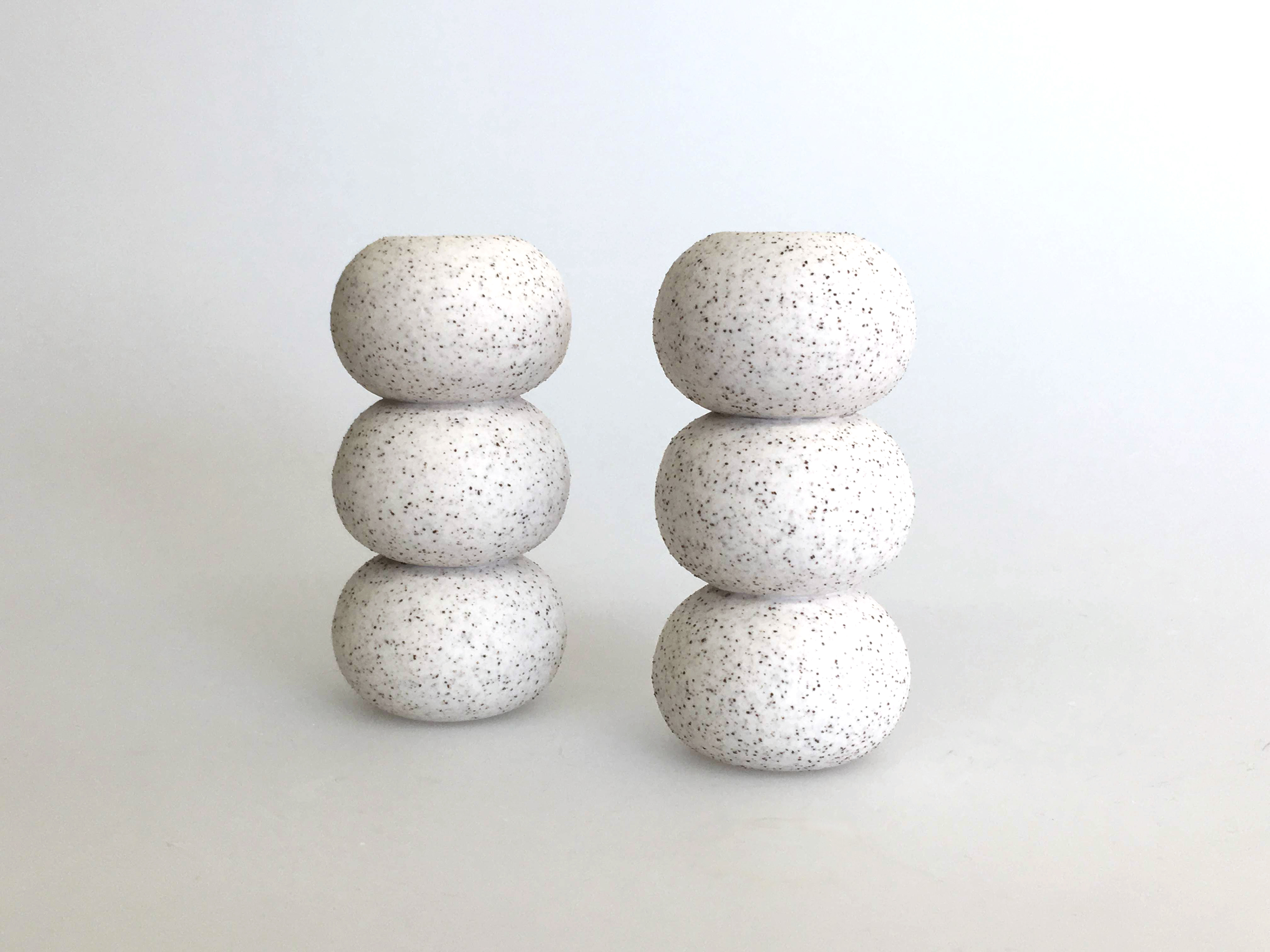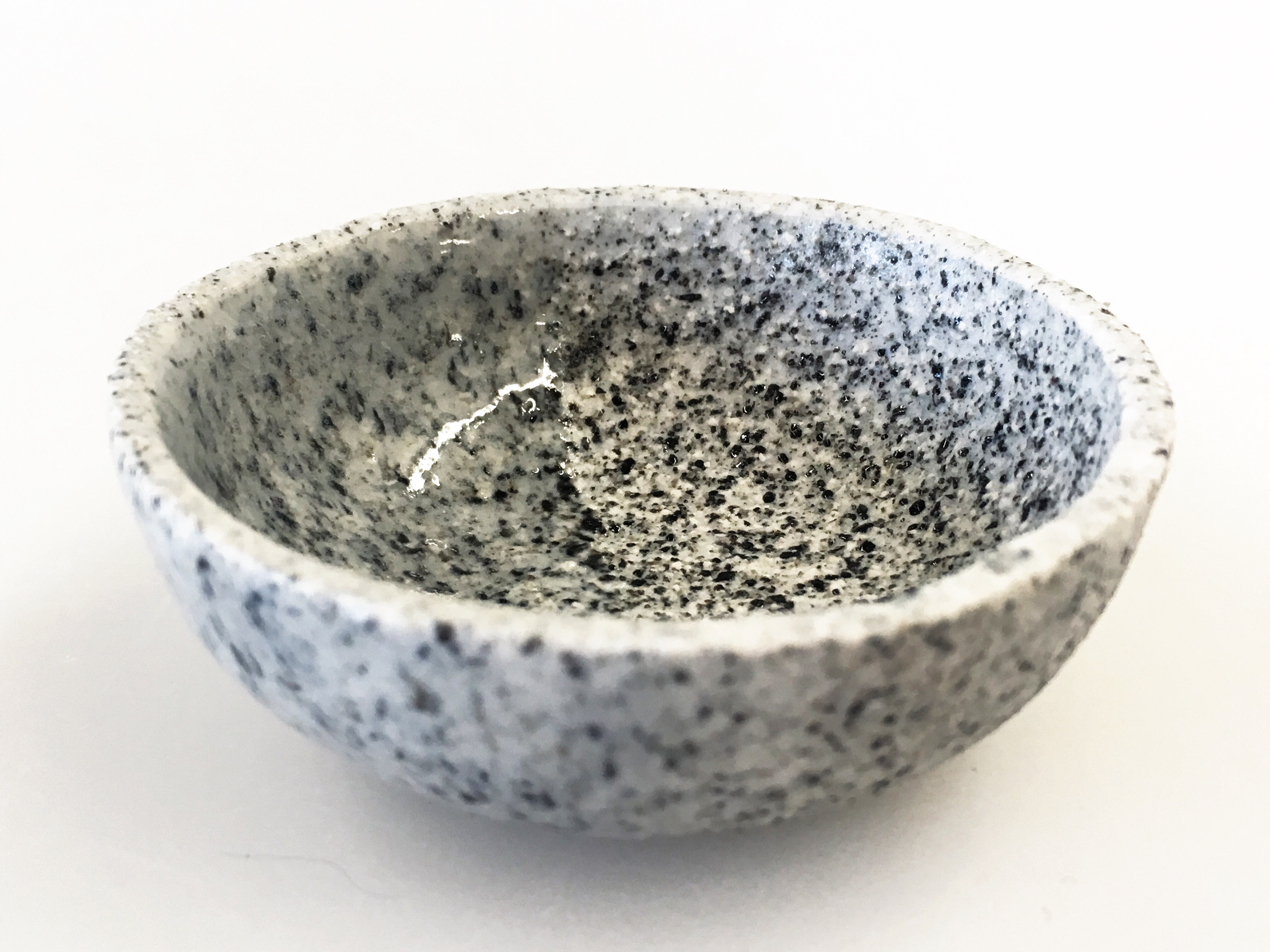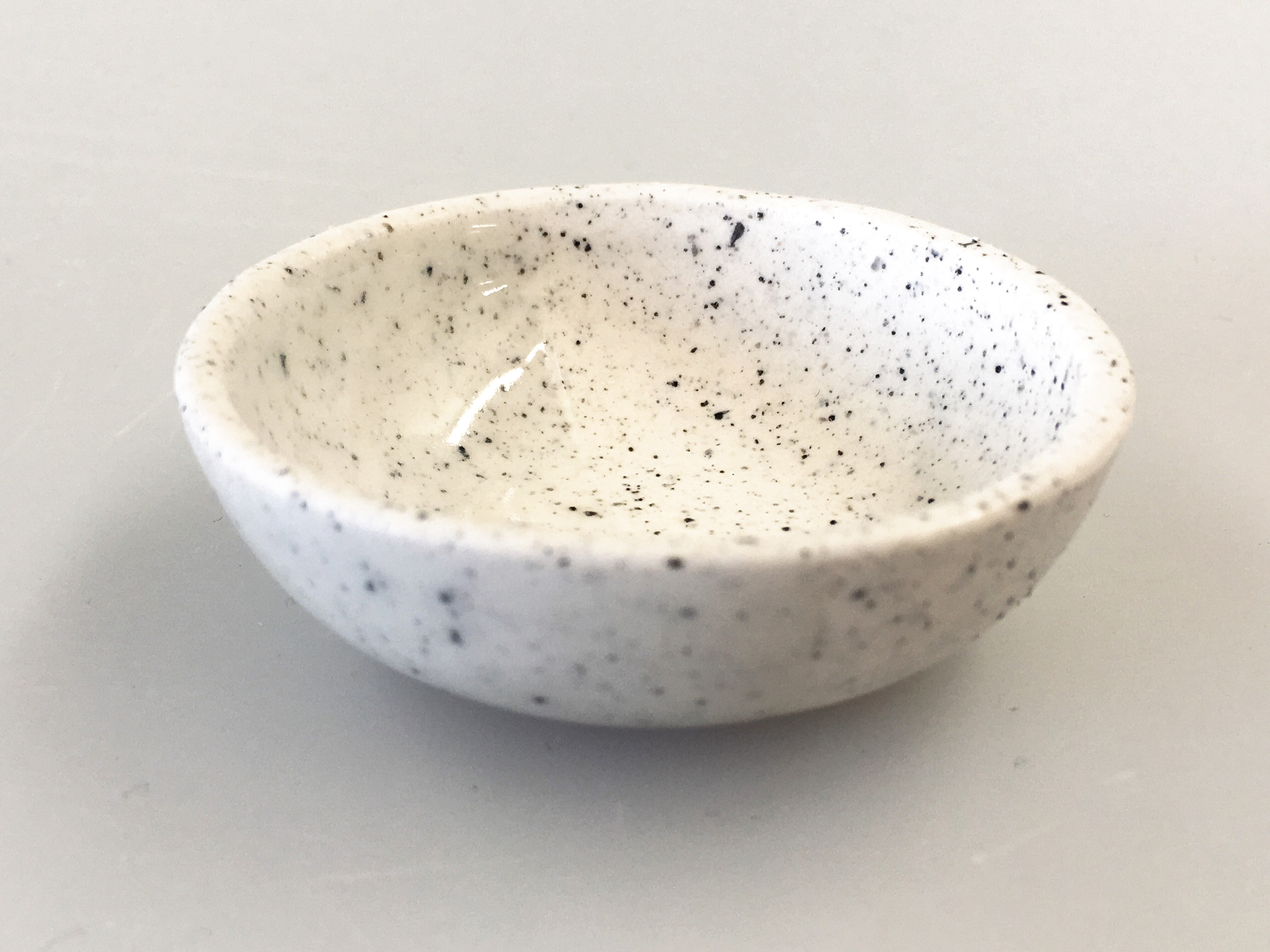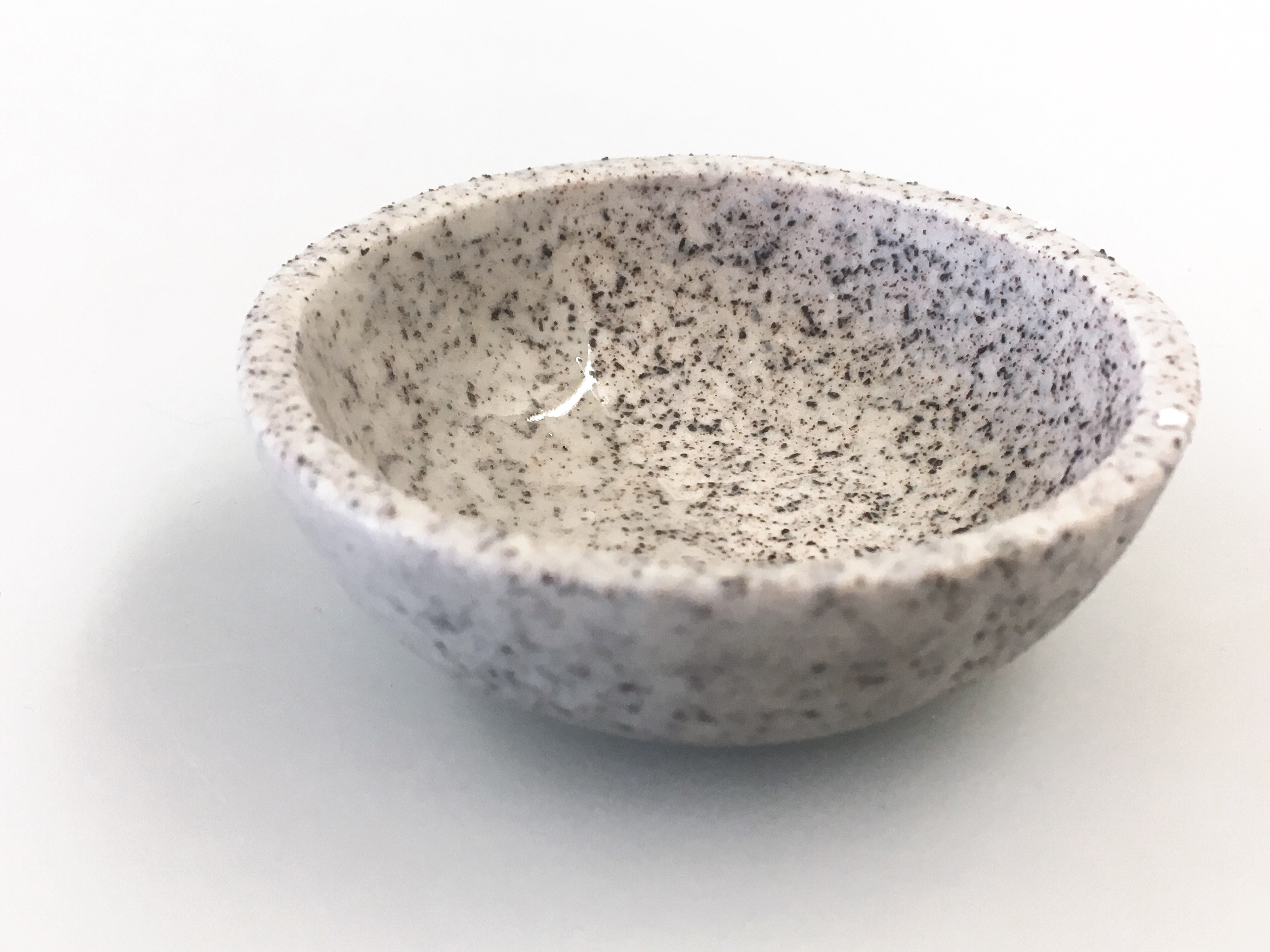
This material research project explored the reuse of glaze-fired ceramics as a component in both casting slip and hand-formable (plastic) clay bodies. Since there is very little existing information or research on the topic, the project was largely based on experimentation. The main goal was to test how already fired ceramics could be used as a raw material in new clay bodies without causing the piece to break due to shrinkage. An important focus was also on achieving visually interesting results.
Ceramic waste generated both in ceramic production and everyday use often ends up in landfills. In this research, I was interested in exploring how discarded ceramics could be reused and whether such a method could be applied in production processes. While working on the project, I aimed to maintain an ecological mindset, considering for example, how to make use of casting leftovers that contained glaze-fired ceramic fragments, rather than disposing of them as mixed waste.
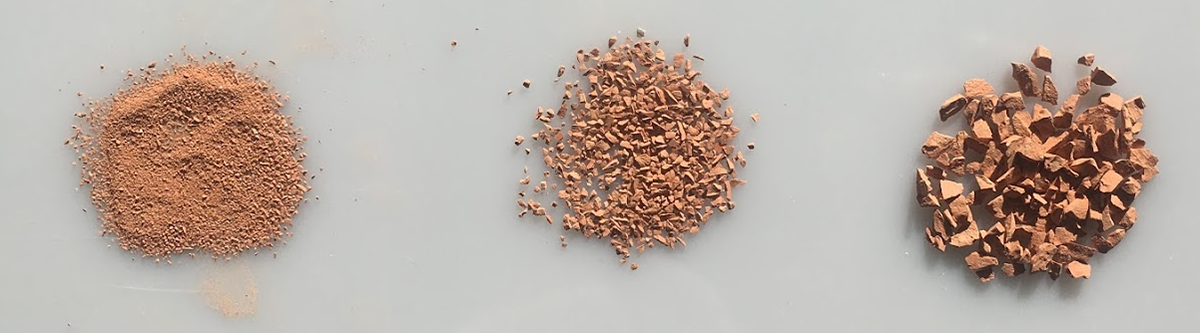
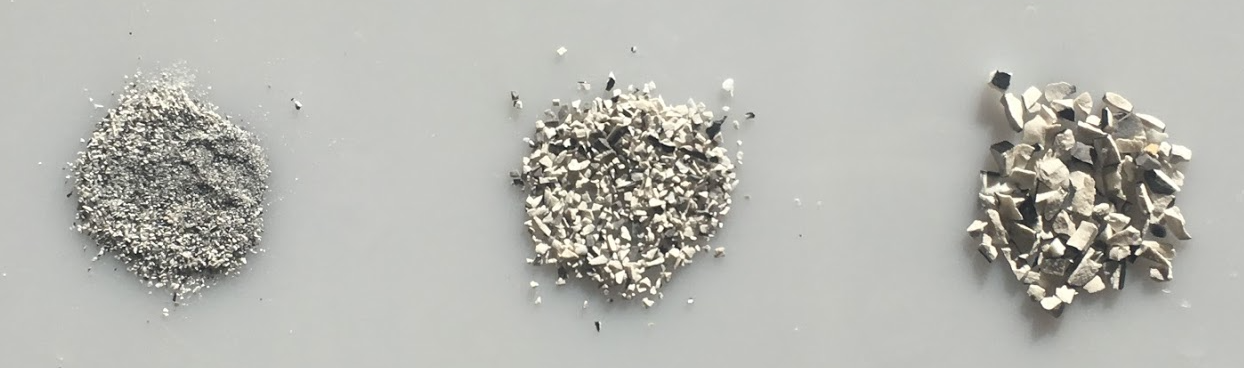
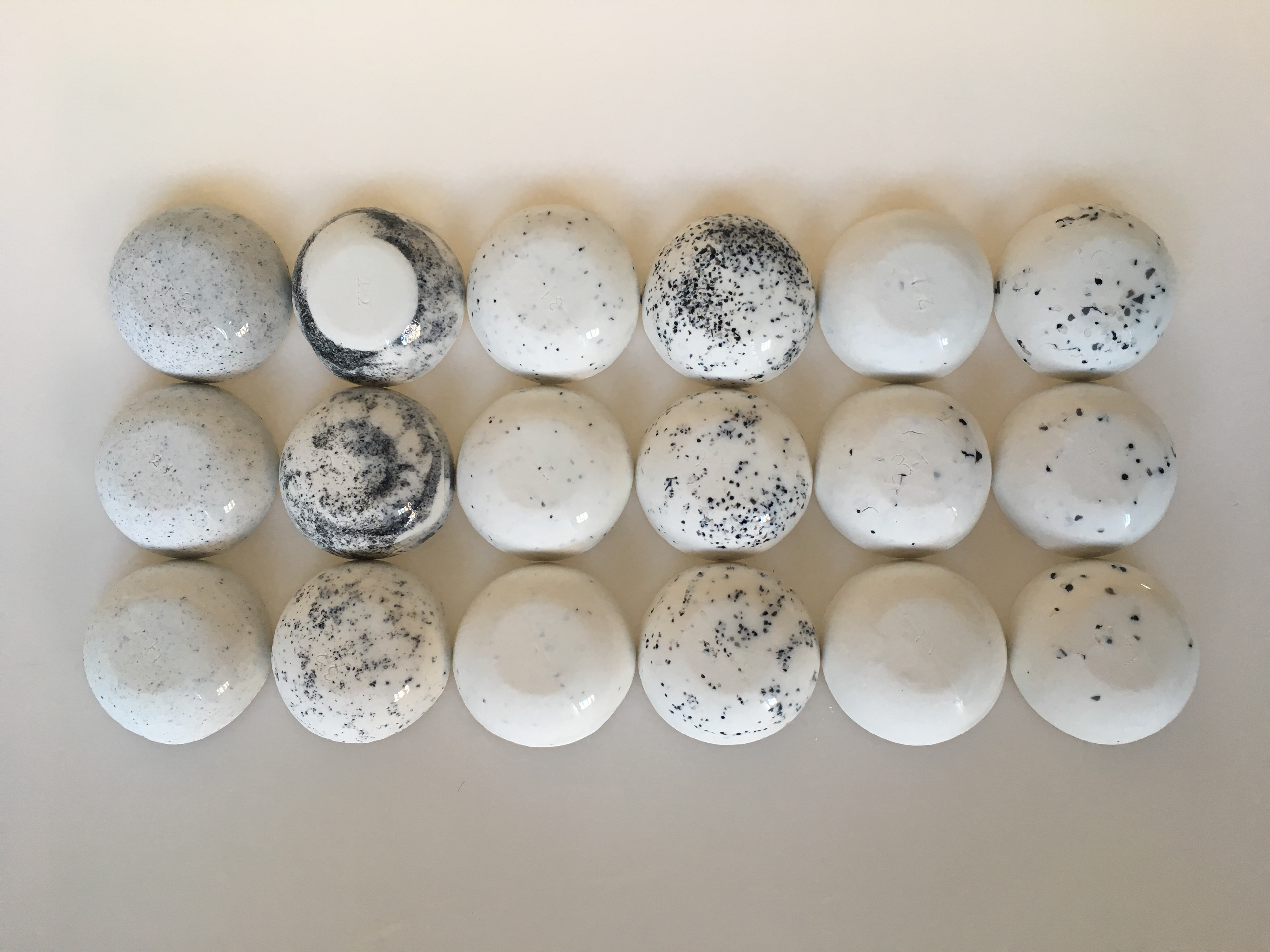
I crushed glaze-fired ceramic pieces made from three different clay bodies, producing four different particle sizes for each type of clay. The smallest particles were powder-like, and the largest were about the size of a fingernail. I mixed these crushed materials into both casting and plastic clay, ultimately producing around 60 cup-shaped test pieces.
The study produced many interesting results. As expected, the smaller the crushed particles were, the better they blended and behaved within the clay body. However, even the larger fragments performed surprisingly well. The most fascinating finding was that each test series yielded visually distinct and appealing results. The research provided a broad range of outcomes that could serve as a foundation for further study in multiple directions.